Choose a short test route
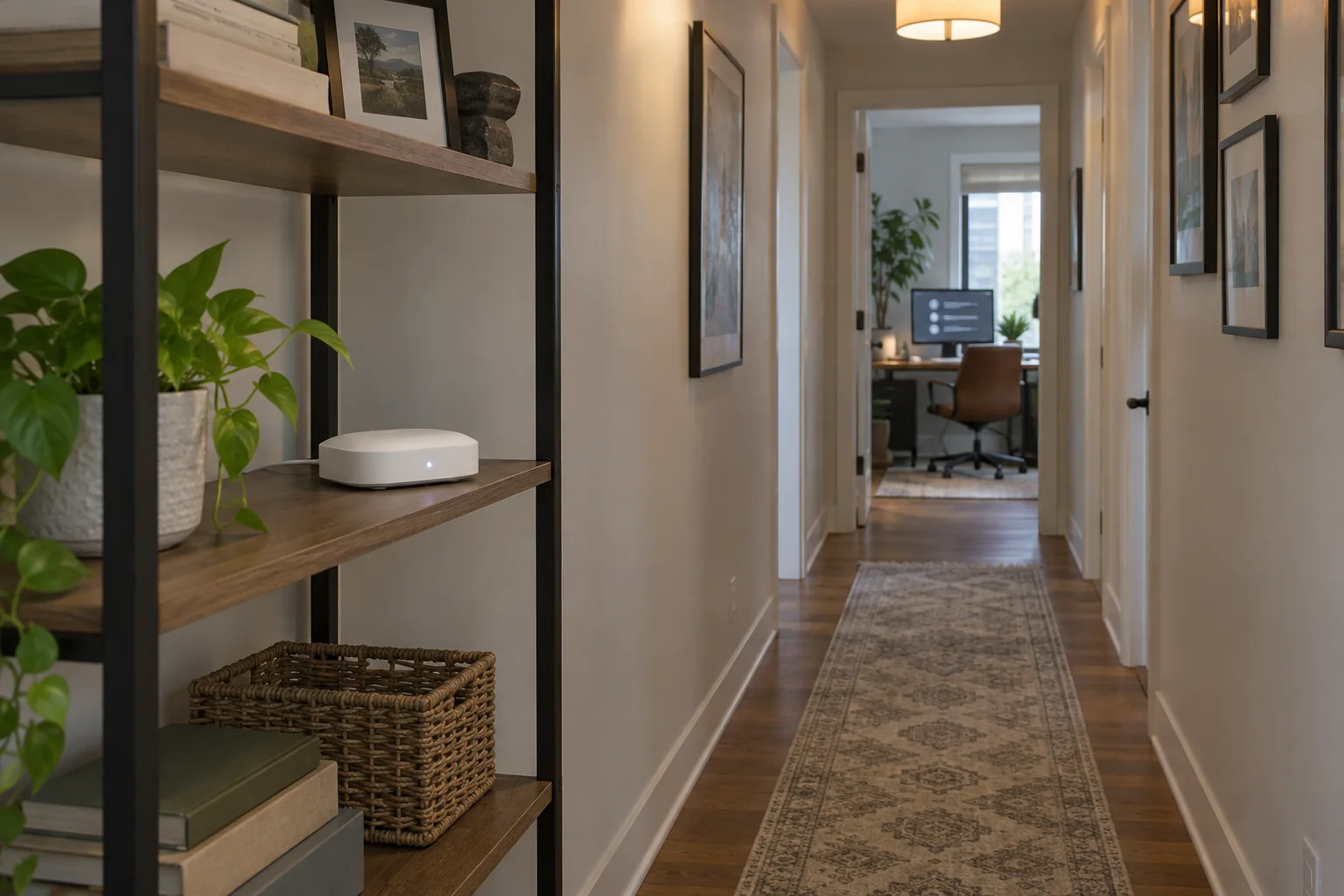
Pick four to six fixed points: beside the router, in the corridor, at the office doorway and at the desk. Use the same laptop and short task at every point. Record whether doors are open and allow the connection to settle briefly after moving.
Do not record signal bars alone. Note whether a website loads promptly, a local file transfer stalls or a call breaks up. A weaker stable signal may be more useful than a strong one with repeated interruptions. If possible, repeat the route with another device; differing results may point towards the first device's antennas or wireless adapter.
Locate where conditions change
If performance deteriorates immediately behind a particular wall, look for an alternative radio path. Moving the router slightly sideways may improve the path through a doorway. Temporarily move it out of a closed cupboard or away from a large metal surface. Change only one position at a time and repeat the same measurement points.
If the weakness appears only at certain times, observe normal usage. Large transfers within your own network or intermittent radio interference can resemble poor coverage. One test in the middle of the night does not establish that the desk will work during simultaneous video meetings.
Mark good, variable and poor positions with different symbols on a sketch. It does not need to be a professional radio survey. Its purpose is to show whether the entire rear of the home is affected or only the spot behind a metal shelf. If moving the laptop slightly makes a substantial difference, inspect the immediate desk surroundings before rebuilding the network. Reusing the same sketch later also shows whether a change actually improved the area that matters.
Choose an extension that addresses the route
If a room remains consistently screened off, first consider whether Ethernet can reach it. An access point connected by that cable avoids the difficult wireless path. A wireless mesh node, by contrast, needs a good connection to the rest of the system at its own location. It should not simply be placed at the worst-served point.
Document the final position and retest with the door closed and normal furniture in place. If interruptions remain despite adequate coverage, investigate them as a separate fault. The test route has already helped establish that not every connection problem should automatically be treated as a lack of range.